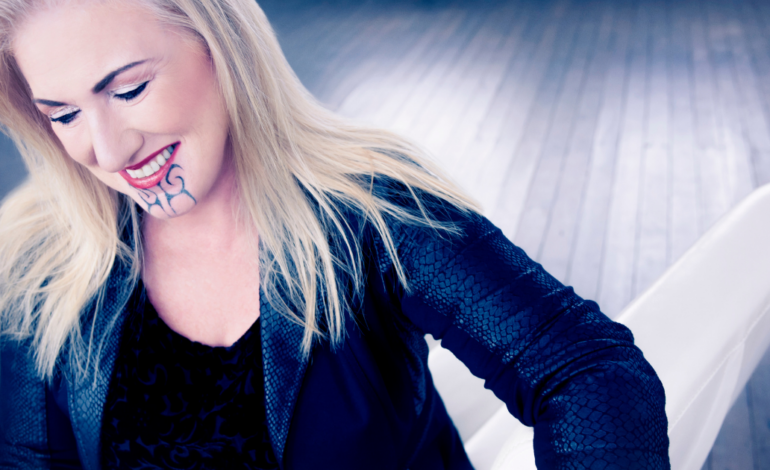



By Jonelle Colabufalo
There is a quiet courage that arrives when you have watched the foundations of your life slip away in an instant. Mine was forged the day before my sixth birthday. Walking to gymnastics holding our mother’s hand, my seven-year-old brother Jared misheard a command — “ready” instead of “wait” — and stepped into the path of an oncoming car.
Jared suffered life-threatening brain injuries and spent weeks in a coma. At one point, his life support was disconnected. Against every medical prognosis, he began to breathe on his own. What followed was a decade of painstaking recovery as he relearned how to sit, eat, speak, and walk.
Growing up in the shadow of that rehabilitation reshaped me. While my family poured their energy into Jared’s recovery, I became the calm one — the reliable child who refused to add to the chaos. I didn’t have a name for it then, but I was learning the posture that would define my life: peace over panic. I had seen how quickly the big things can be taken, so I stopped sweating the small ones.
Giving Grief a Job to Do
Jared defied every limitation placed on him. He graduated from university, ran his own business, trekked the Kokoda Track, played the trumpet in a local band, and became a passionate advocate for road safety education. He was resilience, walking around in ordinary clothes.
Then, on 22 February 2013, the unthinkable returned. Riding in a charity cycling event — doing exactly what he loved — Jared fell from his bike and was killed instantly. He was 31.
Losing him the first time taught me fragility. Losing him the second time taught me finality. The grief was a suffocating weight. As the first anniversary approached, my family stood at a crossroads: retreat into the darkness, or give the pain a job to do.
We chose the job. We organised a community walk in Jared’s memory. We weren’t event planners or philanthropists — just a family at a kitchen table trying to survive a senseless loss. Our goal was modest: raise $20,000 to fund life-saving cardiac surgery for Aze, an eight-year-old boy from East Timor, through Rotary Oceania Medical Aid for Children. We passed the target on the first day.
That single Walk to Remember changed the direction of my life. Grief isolates. But given a purpose, it becomes a bridge — to connection, and to a kind of healing you cannot reach alone.
The Hourglass
When I speak to students and organisations today, I carry an oversized hourglass. I ask people to imagine the top bulb blacked out: none of us can see how much sand is left. The bottom bulb is the past — sand already fallen, choices already made, tragedies that cannot be rewritten.
The only thing we truly hold is the narrow neck in the middle: the sand falling right now.
That realisation changed how I approach everything. We cannot bank time, and we cannot wait for a more convenient season to make a difference. If you act today, a life is different tomorrow. Urgency doesn’t mean panic. It means choosing the next right thing, and doing it.
Fixing the Fence Together
Australia has more than 57,000 registered charities, many competing for the same donor dollars while drowning in overheads and duplication. I grew up on a cattle farm, and farms taught me a different model. When a neighbour’s fence goes down, you don’t draft a contract or start a rival operation. You grab your tools, you show up, and you fix the fence together.
We built the Jared Dunscombe Foundation on that model. We don’t pool donations into vague reserves. We operate as a lean funding and volunteer engine that plugs directly into frontline organisations — experts with proven infrastructure who lack targeted resources. A decade on, more than 80 volunteers and an events committee of eight have helped us reach more than 24,400 children across five countries.
When the youth road toll on the Mornington Peninsula hit an all-time high, I stepped into Jared’s former role with the Teenagers’ Road Accident Group. Alongside emergency service workers, we share raw, human stories with 2,500 students every year — and our region recorded zero youth road fatalities in the 2025–2026 cycle.
Rather than building our own grief programs, we fund specific wish-list items for specialist organisations: regional grief camps and suicide-loss programs for Victorian children with Feel the Magic, steel training sheds for autism assistance dogs with Righteous Pups, and a Himalayan trek with my son that raised $50,000 for children’s prosthetic rehabilitation with Limbs4All. Every project ends with a result you can see and touch.
Your Own Revolution
Here is the most important thing my journey offers you: you do not need a tragedy to begin. You do not need a perfect strategy, and you certainly do not need to be fully healed before you help someone else.
We paralyse ourselves waiting for confidence, timing and resources to align. But the magic of a new beginning lives in the messy, imperfect start. Look around your community, step outside your own head, and ask one grounded question: who needs a hand right now?
When you choose peace over pressure, and contribution over competition, you discover that the sand falling through your hourglass at this exact moment is the most powerful asset you own. Use it to lift someone else — and watch that one choice ripple far beyond your own story.
About the Author
Jonelle is co-founder of the Jared Dunscombe Foundation, a volunteer-powered charity that has reached more than 24,400 children across five countries. A speaker and road safety advocate with the Teenagers’ Road Accident Group, she lives on Victoria’s Mornington Peninsula.