



By Dr. Julie Ducharme
When I first met Amanda Taylor, we were at a networking event. I remember her distinctly the moment she walked into the room — strong, fit, focused, with a presence that commanded attention without asking for it. She had fiery red hair, a bold energy, and the kind of face that tells you immediately this is a woman who has lived something real. I recognized it the way you recognize power when it walks toward you not with fear, but with appreciation.
In true She Talks fashion, my first thought was simple: let’s join forces.

The moment Amanda began speaking about her work, her life, and the road that had brought her to that room, I knew this was not just another passing connection. She was the kind of woman you meet and immediately understand; this one is going somewhere, and she has
already been through something. There was an undeniable quality about her. Not just strength, but earned strength. Not just confidence, but the kind of confidence that is forged, not found. The kind that only comes from surviving what was meant to break you and choosing to build anyway.
As I got to know Amanda more deeply, her story began to unfold in layers. And the more I heard, the more I understood that the woman standing in front of me, successful, purposeful, and deeply committed to pouring into other women, did not arrive here by accident.
And that is precisely why her story matters. Not just for her, but for every woman who has ever held everything together while quietly falling apart inside. For every woman who has ever confused service with love, endurance with strength, or survival with living. For every woman who has ever wondered whether the life she is living is actually the life she was meant for.
Amanda’s story is not simply about leaving a 22-year marriage. It is about what happens when a woman finally stops surviving the life she has been given and starts creating the life she was always meant to live.
“Everyone wants to know if it was a breakdown or a becoming. The answer is yes.”
She describes her journey in a way that has stayed with me since the first time I heard it.
For many women, transformation does not arrive neatly wrapped in clarity and confidence. It does not come with a clear beginning, a tidy middle, and an obvious turning point. It comes through pain. Through disillusionment. Through exhaustion. Through the slow and often heartbreaking realization that the life you have worked so hard to maintain is no longer the life you are able to continue living.
For Amanda, that realization was not sudden. It was layered over years.
She married young, at 22 years old, with sincerity, commitment, and a genuine desire to love well. Like so many women of her generation, she had absorbed deep messages about what it meant to be a wife, a partner, and a good woman. She learned to give. She learned to serve. She learned to be the one who held everything together, managing the home, the details, the responsibilities, and the vast invisible labor that sustains a life but rarely gets acknowledged.
She poured herself into her marriage wholeheartedly. She believed that sacrifice was love. That showing up meant giving everything. That being chosen meant making yourself worthy of being kept.
For a long time, she believed that was what love looked like.
What the world so often calls devotion in women is sometimes something else entirely. Sometimes it is disappearance.”
As Amanda shared her story with me, what stood out was not only what she endured, but how thoroughly she had been conditioned to normalize it. She had spent years managing not just the practical demands of daily life, but the emotional weight of a relationship where her needs, her pain, and her personhood had slowly become secondary to keeping the peace. She became fluent in anticipation. In accommodation. In making herself smaller so that everything around her could feel bigger.
And layered beneath all of that was something even more personal: her body had been carrying its own silent story since she was a teenager.
For years, Amanda sought answers from doctors, went through procedures, and lived with chronic physical pain that was repeatedly minimized or dismissed.
She kept moving. Kept functioning. Kept enduring. She did what women learn to do when the systems around them fail to take their suffering seriously — she adapted, carried it quietly, and survived.
Until her body, in its own way, gave her a different future.
“She was taught, as so many women are, to manage her pain rather than expect it to be healed.”
In 2019, Amanda underwent a hysterectomy. What began as a medical decision became something far more significant. It became a turning point. A threshold. The beginning of a personal awakening she had not anticipated and could not have fully prepared for.
After decades of chronic pain, she finally experienced life without it.
And in that absence, in that unexpected quiet where suffering used to live, she began to hear herself more clearly than she ever had before.
She began to see her life honestly.
She began to recognize that she had spent years not simply inside a marriage, but inside a deeply ingrained pattern of self-abandonment. When pain becomes your normal, you do not always realize how much of your identity has been quietly constructed around surviving it. You do not always see the cage, because the cage is the only world you have ever known.
But once the pain stopped, the clarity arrived.
And clarity, once it comes, is relentless.
Amanda began to see how much of herself had been organized around duty, performance, sacrifice, and silence. She had been living by a prescription handed to her long before she was old enough to question it be this, give this, do this, carry this, become this. She had followed that prescription faithfully, completely, and without reservation.
But somewhere in the quiet after the surgery, a question rose up that she could no longer ignore.
What about me?
That question changed everything.
“When pain becomes your normal, you do not always realize how much of your identity has been quietly constructed around surviving it.”
And as so often happens when a woman begins to wake up in one area of her life, other areas begin to stir as well.
For Amanda, one of those areas was her career.
She found real estate. And in many ways, real estate helped her find herself.
What began as work gradually evolved into something much deeper a sense of purpose, a place of belonging, and a mirror that reflected back a version of herself she had never fully seen before. She learned the business with focus and discipline. She sharpened her instincts. She stepped into her strengths with growing confidence. Over time, the people who had once hired her became her mentors, and then her partners. She moved from employee to equal. She built something real, something hers, something that could not be taken away or diminished. She went Employee to CEO building an empire.
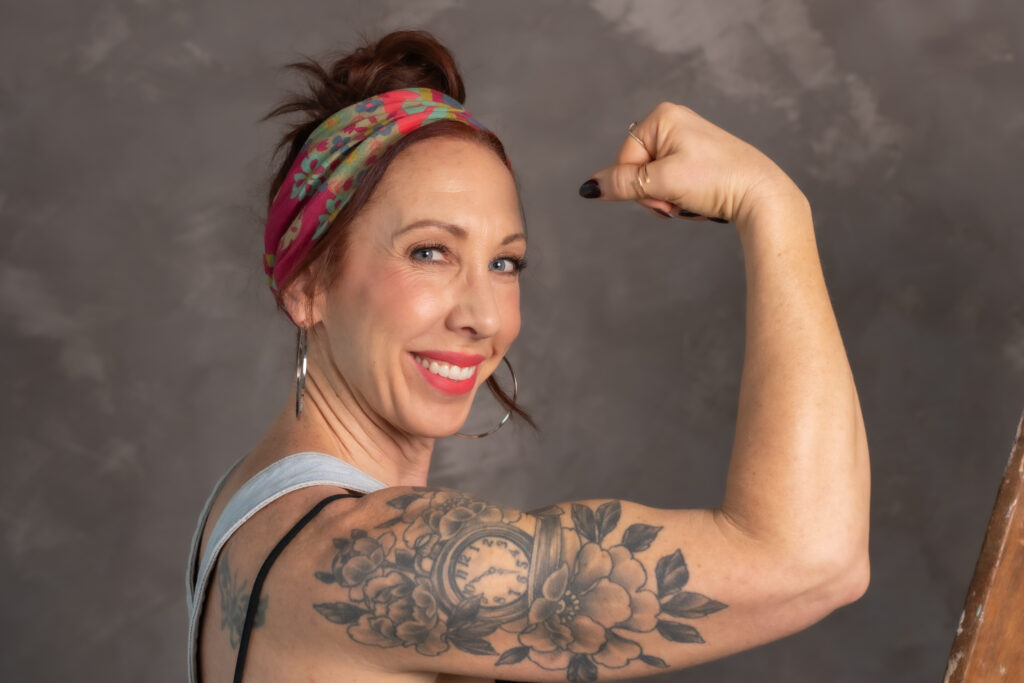
And for the first time in a very long time,
She came ALIVE!
That is a powerful and particular kind of experience for a woman who has spent years living entirely for others. To come alive inside your own gifts. To feel the specific electricity of doing something that fits. To move through the world not as someone fulfilling a role, but as someone fully inhabiting her own potential.
Amanda’s story is a reminder that purpose is not simply about profession. It is about identity. It is about reclaiming the parts of yourself that got buried beneath expectation, responsibility, and chronic endurance. It is about the profound discovery that your life does not end because one chapter does. In many cases, the most meaningful chapter is the one that begins in the wreckage of everything that came before.
“Purpose is not simply about profession. It is about identity. It is about reclaiming the parts of yourself that got buried beneath expectation, responsibility, and chronic endurance.”
For Amanda, the end did not announce itself dramatically. It arrived the way most real turning points do quietly, ordinarily, and with a certainty that needed no explanation.
She woke up one morning and the weight she had been carrying was gone.
Not metaphorically. Physically. Emotionally. The constant low hum of dread, obligation, and bracing that had become the texture of her mornings it was not there. And in that absence, she made a decision so simple and so final that it needed no fanfare.
“She was not going back. Not with all the answers. Not with a plan. But with something more powerful than certainty — with peace.”
With the irrevocable knowledge that the woman she had become could not willingly return to the life that had been designed for the woman she used to be.
What strikes me most about Amanda’s story is not the leaving itself. It is the waking up. Because real strength was not in the exit. It was in the awakening. It was in the willingness to hear the truth. In the courage to choose peace even when peace came with grief attached. In the refusal to go on calling survival the same thing as living.
Today, Amanda Taylor is not defined by what she went through.
She is defined by what she built after it.
She built a career. She built a life. She built freedom. She built a version of herself that is fully, unapologetically her own. And perhaps most beautifully, she built purpose from pain. She took what had diminished her and turned it into the very thing that now drives her forward.
Amanda uses her voice, her presence, and her lived experience to support other women who are navigating their own awakenings. She knows from the inside what it means to lose yourself inside the roles you were taught to play. She knows what it means to stand in the middle of your own life and realize you want more, need more, and deserve more. She knows the particular fear and freedom that live side by side when a woman finally decides to choose herself. And because she has walked that road in full, she carries a quality of wisdom that cannot be taught in a classroom or earned through secondhand experience.
It has to be lived.
She lived it.
There is something extraordinary about a woman who takes her trauma and transforms it into purpose. Not because the pain was required. Not because suffering is noble. But because she refused, with everything she had, to let it be the final word on her story.
Amanda turned years of silence into a powerful voice.
- She turned self-abandonment into radical self-ownership.
- She turned survival into leadership.
- She turned her pain into her purpose.
And now she stands as living proof of something every woman needs to see that it is never too late to begin again. That the life waiting on the other side of all that endurance may be the truest, fullest, most aligned version of everything you were always meant to be.
Today Amanda is a Business and Wealth Stategist, speaker, Investor, and owner of Stop Earning a living and Start Building a legacy. And she is educating and empowering women to take control of the money in their life.