



By Lisa E Kirkwood
Every year, the USA observes a number of cultural heritage months that recognize the significant contribution of immigrants of various age groups, backgrounds, and ethnicities who have helped to build the country as we know it today. Each month is a tribute to their life journeys, struggles, and ultimate triumphs that shaped up the American history, culture, and society, and continue to build the fabled American Dream now and into the future.
Preceded by February – Black History Month (African American History Month), March – Women’s History Month & Irish American Heritage Month, and April – Arab American Heritage Month, May is Older Americans Month, Jewish American Heritage Month, and Asian American, Native Hawaiian, and Pacific Islander Heritage Month.
Older Americans Month
Older Americans Month (OAM) celebrates older adults, highlights aging trends, and reaffirms commitments to their well-being. Established in 1963, the month focuses on supporting independence and combating ageism, honors older Americans, particularly those who have defended the country, and acknowledges their impact on communities.
OAM aims to challenge stereotypes about how society perceives and approaches aging, while building meaningful relationships and social connections between seniors and younger age groups. Communities are encouraged to host events, offer volunteer opportunities, create mentorship programs, or run social media campaigns to foster connectivity and engagement.

With roughly one in four older adults experiencing social isolation, OAM highlights the need for social belonging for mental and physical health by sharing meaningful stories and promoting a positive view of aging.
“OAM serves as a reminder to support and value older adults, ensuring they remain an active part of society.”
Jewish American Heritage Month

Jewish American Heritage Month (JAHM). Following a 2004 commemoration of the 350th anniversary of Jewish history in America, Congress urged the creation of a dedicated month to honor the diverse contributions of Jewish Americans to fields such as science, politics, arts, and military service, and to celebrate the community’s resilience. From 2006 on, this initiative has been helping to combat prejudice and to highlight the “quintessential American story” of the Jewish experience, including immigration, community building, and integration.
The Weitzman National Museum of American Jewish History, a Smithsonian-affiliated museum, frequently leads wide-scale efforts, providing resources for educators, students, and families to learn about Jewish traditions, history, and contributions. People can visit themed exhibits, Holocaust museums, or historical societies, learn about Jewish American culture, try traditional recipes at local Jewish deli stores and restaurants, support Israeli-owned businesses, or engage in various social activities to connect more with the Jewish diaspora in the USA and across the globe. New York is home to the largest Jewish community in any city proper in the world.
AAPI Heritage Month
Asian American, Native Hawaiian, and Pacific Islander Heritage Month
A numerous and important segment of the US population, Asian Americans, Native Hawaiians, and Pacific Islanders, have been instrumental in developing this new nation. The USA is considered a “global village” where every country and culture is represented to some extent by different individuals and ethnic groups. Generations of immigrants continue to expand the demographic and social footprint, as well as the influence of the American people, lifestyle, customs, and values throughout the world.
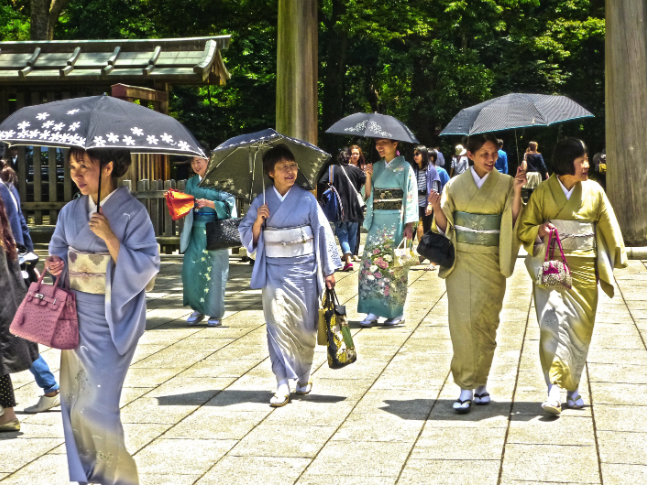
Congress passed a law in 1992 permanently designating May as Asian/Pacific American Heritage Month. AAPI Month celebrates the rich, broad, and diverse culture that spans from countries such as China, Japan, Korea, Indonesia, Malaysia, Laos, the Philippines, Singapore, Samoa, Thailand, Taiwan, Vietnam, India, Pakistan, Bangladesh, Sri Lanka, and Nepal, to name a few.
Fun fact: Asian and Pacific Island cultures share a love for bright colors. Red symbolizes good luck and prosperity in Asian cultures and vitality in the Pacific Islands. In East Asia and India, blue often symbolizes immortality and eternity, whereas the Pacific Islands use it to allude to the sea and the sky.
The first Asians documented in the Americas were mostly Filipinos and Indians, who arrived as early as 1587 and 1635. The next groups of Asians who came here in the 1700s, 1800s, and 1900s were Chinese, Japanese, Koreans, Samoans, and Vietnamese. Filipino Americans are the third-largest Asian ethnic group in the U.S. after Chinese and Indian Americans, making their inclusion vital for AAPI data and advocacy.
The month of May was chosen to commemorate the immigration of the first Japanese to the United States on May 7, 1843, and to mark the anniversary of the completion of the transcontinental railroad on May 10, 1869. The majority of the workers who laid the tracks were Chinese immigrants.
Various federal agencies, the Library of Congress, National Archives and Records Administration, National Endowment for the Humanities, National Gallery of Art, National Park Service, Smithsonian Institution, and United States Holocaust Memorial Museum offer a wealth of materials, documents, toolkits, and other resources to help people observe the month. Every May, during AAPI and throughout the year, the USA celebrates the cultural heritage, hard work, and achievements of Asian and Pacific Americans with community festivals, government-sponsored events, exhibits, programs, and educational activities, as well as traditional and social media campaigns.
Asian Americans, Native Hawaiians, and Pacific Islanders have made countless contributions to society and culture through art, activism, athleticism, literature, scientific achievements, and political involvement. A diverse, vast, and inclusive segment of the US population, immigrants of all nations, and particularly Asian Americans, are an integral part of local, regional, and national history, and their lives have been intertwined with this young nation’s development, growth, and progress.
This month, we take time to reflect on and recognize the major role that the elderly, Jews, and AAPI communities have played in our society by establishing a foundation for future generations to thrive and adapt to change and adversity. As we learn from the experiences, perspectives, and continuing legacy of outstanding leaders and pioneers…
“We honor the past, inspire the future, and realize that we are all involved and invested in our collective success as we share the same country, USA – the “land of all possibilities”.

Lisa E. Kirkwood
Lisa E. Kirkwood is a diversity and leadership expert, storyteller, and advocate for cultural understanding. Through her work, she highlights the experiences and contributions of diverse communities, helping to build bridges of understanding and inspire future generations.