



By Lisa E Kirkwood
As each year winds down and draws to a close, in many parts of the world people spend their winter vacations with family, friends, and loved ones. Schools are on break for a couple of weeks, many businesses and institutions in various countries are closed for the holidays, and employees enjoy extended time off from mid-December until after the first week of January when regular activities resume.
Customs from Motherland
In my native country, Romania, the beginning of the new year is marked by various observances and traditions, some of which are thousands of years old and part of the national cultural heritage. These include Plugusorul and Sorcova, both carrying some form of magic connotation.
Plugușorul (meaning “the little plough”) is an ancient, pre-Christian New Year’s Eve ritual and carol focused on wishing for good crops, good health, and prosperity for the coming year.
This particular custom is deeply tied to Romania’s rural and agrarian history. The plough symbolizes the start of the new agricultural year and the hope for a rich harvest, drawing on ancient beliefs that associated the sun and the plough with earth’s fertility.
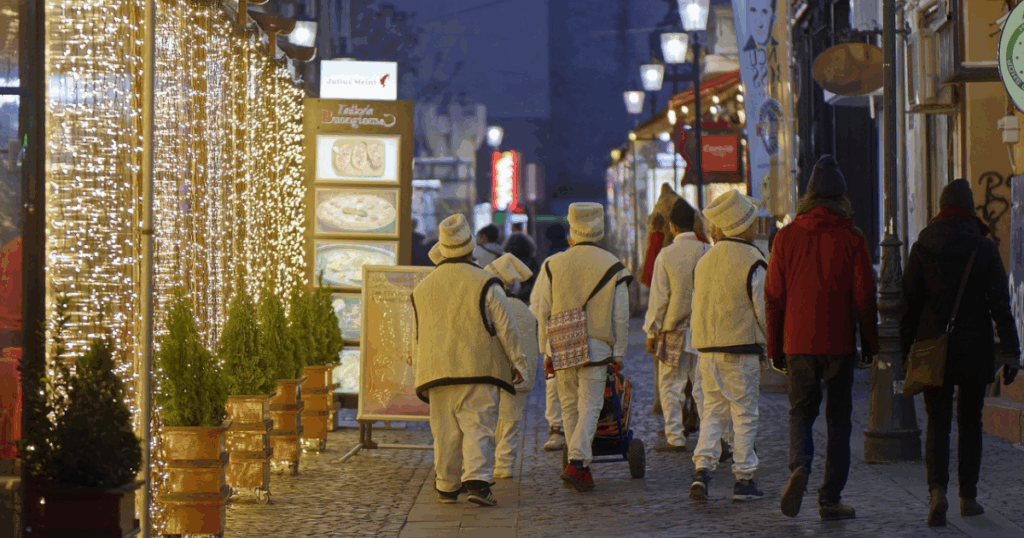
Groups of people, often dressed in traditional Romanian folk attire, travel through villages and cities on New Year’s Eve, reciting a rhyming, versified composition called urătură (well wishing). This chant is a narrative poem that describes the process of agricultural work, from plowing and sowing to harvesting, often incorporating fabulous elements.
Participants carry small, symbolic ploughs, bells, and whips, and often a “buhai” (a friction drum that imitates the sound of oxen or bulls). The loud noises associated with this ritual—shouting, cracking whips, and the ringing of bells—are intended to chase away evil spirits and ensure a fresh, positive start to the year.
The hosts who are caroled reward the group with gifts such as colaci (festive bread), apples, walnuts, and money.
This symbolic ceremony represents the cycle of death and rebirth associated with the end of the old year and the beginning of the new one.
Sorcova is a Romanian New Year’s Day custom observed on the morning of January 1st. The sorcova is a twig or stick adorned with artificial flowers; originally, it was made from a live tree branch, believed to transfer youth, health, and long life.
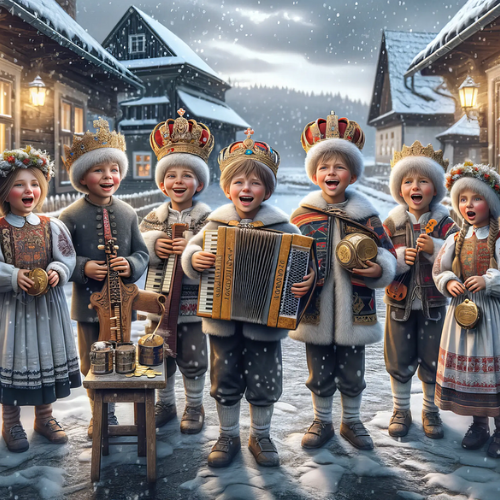
Children go from house to house, reciting special verses and tapping the hosts on the back with the sorcova to bless their household and wish them strength, luck, and prosperity. In some areas, children also throw grains of wheat for abundance.
In exchange for the blessings, the caroling children are given small gifts, candy, money, or sweet bread (cozonac) for spreading good cheer and good charm to their families and communities at the beginning of the year.
Customs like Plugușorul and Sorcova reinforce traditions, strengthen community ties, and remain a cherished and vibrant part of the Romanian cultural identity and New Year’s celebrations.
Revelion
Considered “the longest night of the year”, the revelion is the night of December 31st to January 1st, when many people stay awake to greet the new year. The word itself has French origin, réveil, meaning “awakening”, and Romanians who gather at the traditional New Year’s Eve dinner are up until midnight or even until dawn, as it is considered good luck to be awake when the new year starts; it’s a custom widely spread in various countries of the world
During the revelion night, special TV programming airs on many channels, with re-runs for a few days afterwards, including entertainment shows and artists’ recitals.
Restaurants organize year-end parties and offer special menus for the guests. The hospitality industry greatly benefits from increased traffic during the holidays, as hotels and resorts book a record number of travelers who choose to observe this event outside the family circle.
Usually, friends and neighbors gather at each other’s homes to party. At these night-long events, the participants, mostly dressed in elegant outfits, dance, eat, drink, and watch fireworks that mark the beginning of the new year. The revelion feast is a big deal for many people and businesses during their winter vacation. Those who can afford to do so travel far and wide for this occasion, to distant regions and even to foreign countries.
St. John’s Day
The celebration of “Sf. Ion” (Saint John the Baptist) is a major religious holiday and social event in Romania, observed annually on January 7th. Sf. Ion, or Saint John’s Day, follows the Boboteaza (Epiphany Day) on January 6th, and it is a time of great joy, widespread name day celebrations, and parties.
Not only does it honor Saint John the Baptist, but it also incorporates numerous folk traditions, most notably the splashing of people with water or snow for good luck.
Following the blessing of the waters on Epiphany Eve, church goes take home the holy water for its protective and purifying powers. On the morning of Sf. Ion, young people who have collected this water splash everyone they meet as a blessing for health and happiness throughout the year. The splashed individuals reward them with small gifts, candy, or money. Such water rituals also aim to protect households from fire and animals from beasts.
In some rural areas, married women gather and party at a host’s house, bringing food and drinks to celebrate together until morning.
As January 7th is the day of Sf. Ion, millions of Romanians bearing names like Ion, Ioan, Ioana, and many derivatives celebrate their name day (onomastica) on this date. Such events are significant social gatherings, often as important as birthdays, involving large family meals with traditional dishes like sarmale (cabbage rolls) and cozonac (sweet bread), gift-giving, and the traditional greeting “La mulți ani!” (Many happy returns!).
Popular tradition suggests that after Saint John’s Day, the frost “gets baptized” and begins to soften, indicating the weather will start getting warmer. This day also marks the end of the winter holidays.
In Spanish speaking countries, Día de los Reyes, or Three Kings’ Day, is a celebration on January 6th that closes the Christmas season, commemorating the arrival of the Three Wise Men to see Jesus. Celebrations include eating Rosca de Reyes (a sweet bread), children receiving gifts from the Three Kings like they do from Santa Claus, and sometimes themed public parades called “cabalgatas“. Families also leave out shoes for gifts, milk and cookies for the kings, and food for their camels.
Celebrations and observances across the globe
New Year customs vary worldwide, with significant differences in regional and cultural practices that include, for example, smashing plates in Denmark for luck, banging on pots and pans in Ireland to
scare away unwanted spirits and poor fortune, cleaning houses in Japan to start fresh, wearing red underwear for love or yellow for wealth in Latin America, keeping money in the pockets for financial stability, and eating black-eyed peas or long noodles for prosperity and a long life.
Foods and Drinks
Many cultures incorporate specific foods as symbols of good luck, abundance, and progress for the coming year.
Bubbly beverages like champagne are a classic choice for toasting and celebrating joyous occasions. In Scotland, a warm, spiced drink called “hot pint”, or Wassail is shared with neighbors for good health and abundance.
In Spain, eating 12 grapes at midnight, with one for each stroke of the clock, is a tradition for good fortune, and people can make 12 wishes for the 12 months of the year. It is said that sweet grapes predict a happy and successful year full of optimism and joy.
Very popular in Southern USA, the classic New Year’s Day meal, Hoppin’ John is a traditional dish made of black-eyed peas, rice, and smoked pork seasoned with vegetables. Black-eyed peas symbolize coins or pennies, collard greens (often served alongside meat) represent paper money (greenbacks), and cornbread symbolizes gold.
In Romania, the foods on the New Year’s dinner table are of exceptionally good taste, expensive, even imported luxury items and delis, from appetizers to fine wines. Traditionally, dinner consists of pork roast, French salad, cabbage rolls, and sometimes fish specialties. Cheese pies with fortunes are also very popular. Deserts include fresh fruits, fruit pies, and elaborate cakes.
General Traditions
Visually spectacular firework displays are a common way to celebrate the start of a new year.
Traditional songs are often sung to bid farewell to the old year.
An ancient custom in European history, kissing a new friend or a long-loved one at midnight, is believed to bring luck and blessings.
A popular modern tradition, setting goals and making resolutions for the coming year is a practice with ancient roots, dating thousands of years back to the Babylonians.
In Times Square, New York City, USA, on New Year’s Eve, a large ball descending at midnight marks the new year.
In some countries, after the New Year’s Eve party, people exchange more gifts under decorated fir or pine trees, a tradition that carries over from Christmas.
Other cultural practices
In the Philippines, wearing polka dots is thought to bring good luck and a prosperous, “full circle” year.
In Latin America, the color of your underwear can determine your fortune; red is for love, yellow for wealth, and white for peace.
In Japan, the tradition of o-souji involves a deep cleaning of the house before the new year to purify the space for a fresh start.
In Greece, hanging onions on doors symbolizes rebirth, growth, and new beginnings.
In Brazil, on New Year’s Eve, many people go to the beach wearing white attire; they jump over seven waves to thank the ocean goddess Iemanjá and receive blessings. People often make a wish for each of the seven waves they jump, and some may also offer flowers or gifts to the sea.
Goals and Gratitude
From spring to summer, from fall to winter, from mid-year to year end, with every annual change in the calendar, there’s an overall expectation that the new year will bring fresh energy, planning, and realignment. At least in the month of January, many people try to settle into more productive rhythms and maintain focus on their personal and career goals, taking stock of where they are and where they want to be and exploring new opportunities in each season.
While we appreciate our restful, joyful, and meaningful holidays, celebrating the New Year with confetti, champagne, and fireworks at midnight, or ringing a bell on New Year’s Day, let’s welcome a more prosperous time in our lives, raise our glasses for a toast, cheer, make wishes, give thanks for a good year, and be hopeful for a better one.
Happy New Year to all the nations of the world!


